
Introduction
Artificial Intelligence (AI) has become the backbone of modern computing, powering data centers, autonomous vehicles, medical research, and countless applications that demand high computational capacity. Behind every AI server lies an essential but often overlooked component: the heatsink. Without efficient cooling, the most advanced AI chips can quickly lose performance or even fail due to overheating. Choosing the right heatsink for AI servers is no longer a minor design decision—it is a strategic step that determines system reliability, energy efficiency, and long-term cost savings.
This article explores how to select an efficient AI heatsink, with a focus on material choices, structural design, and industry best practices.
Why AI Servers Require Advanced Cooling Solutions
Unlike traditional workloads, AI servers run continuous, high-intensity calculations involving large datasets and parallel GPU or TPU operations. This creates a dense thermal load concentrated in a compact space. A poorly designed cooling system leads to:
Performance throttling due to overheating
Reduced lifespan of AI hardware
Higher power consumption from inefficient thermal management
Increased maintenance and downtime
Therefore, a well-designed AI heatsink is not only about cooling—it directly influences productivity and operational costs.
Key Materials for AI Heatsinks
The choice of material plays a defining role in thermal conductivity, durability, and manufacturing cost.
Aluminum
High thermal conductivity with relatively low weight
Cost-effective for large-scale production
Suitable for extrusion profiles, allowing flexible designs
Copper
Superior heat transfer efficiency
Heavier and more expensive than aluminum
Commonly used in hybrid heatsinks for hotspot management
Advanced Alloys & Composites
Combine lightweight features with high thermal conductivity
Increasingly popular in AI heatsink manufacturing where efficiency per unit weight matters
The trend is moving toward hybrid heatsinks where copper bases manage hotspots, and aluminum fins dissipate heat across larger areas.
Structural Design Considerations
A heatsink’s performance does not only depend on the material—it also relies on structural engineering.
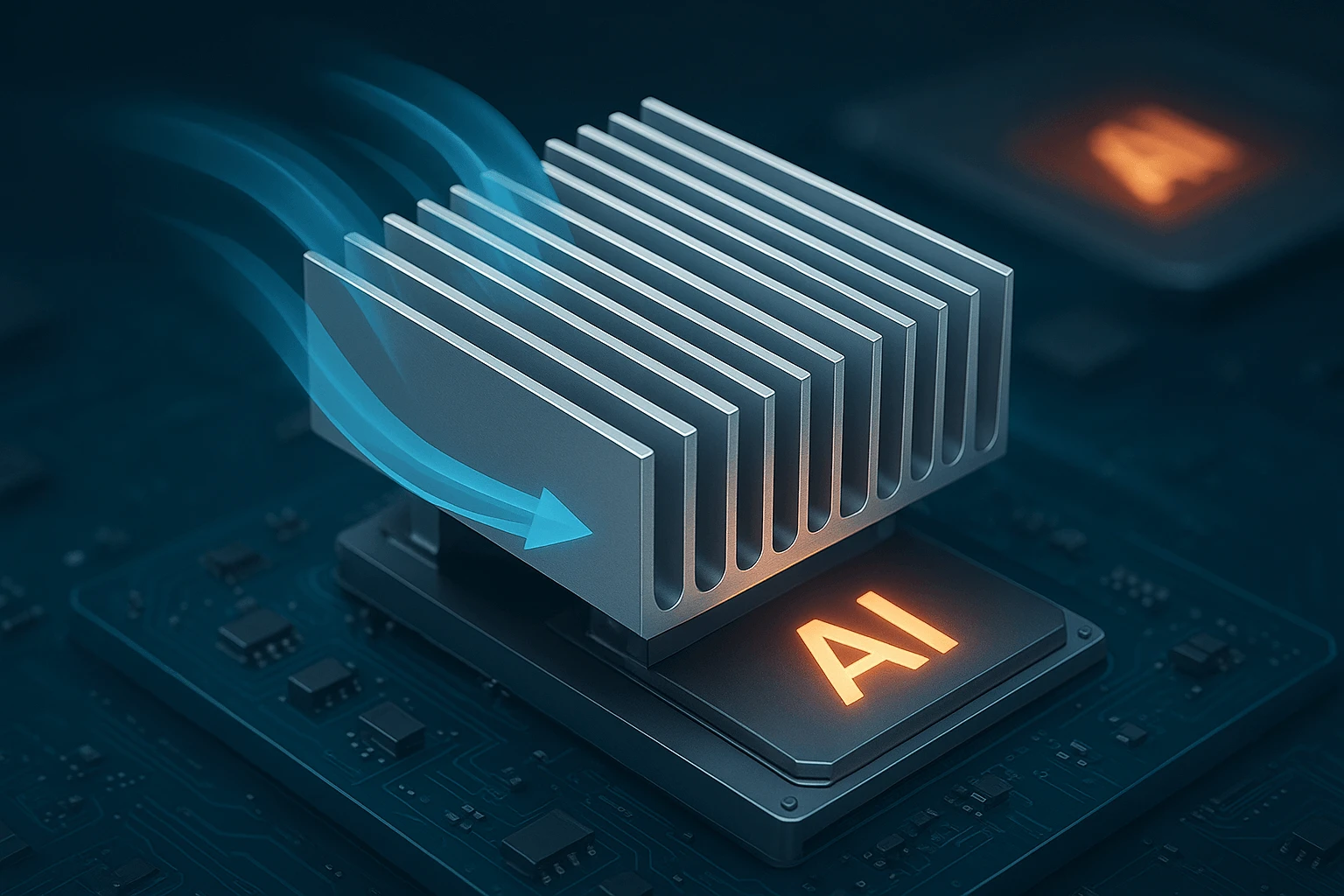
Fin Density and Shape: More fins increase surface area but may obstruct airflow. Balancing density with ventilation efficiency is essential.
Surface Treatment: Anodizing and coating improve durability and radiation heat transfer.
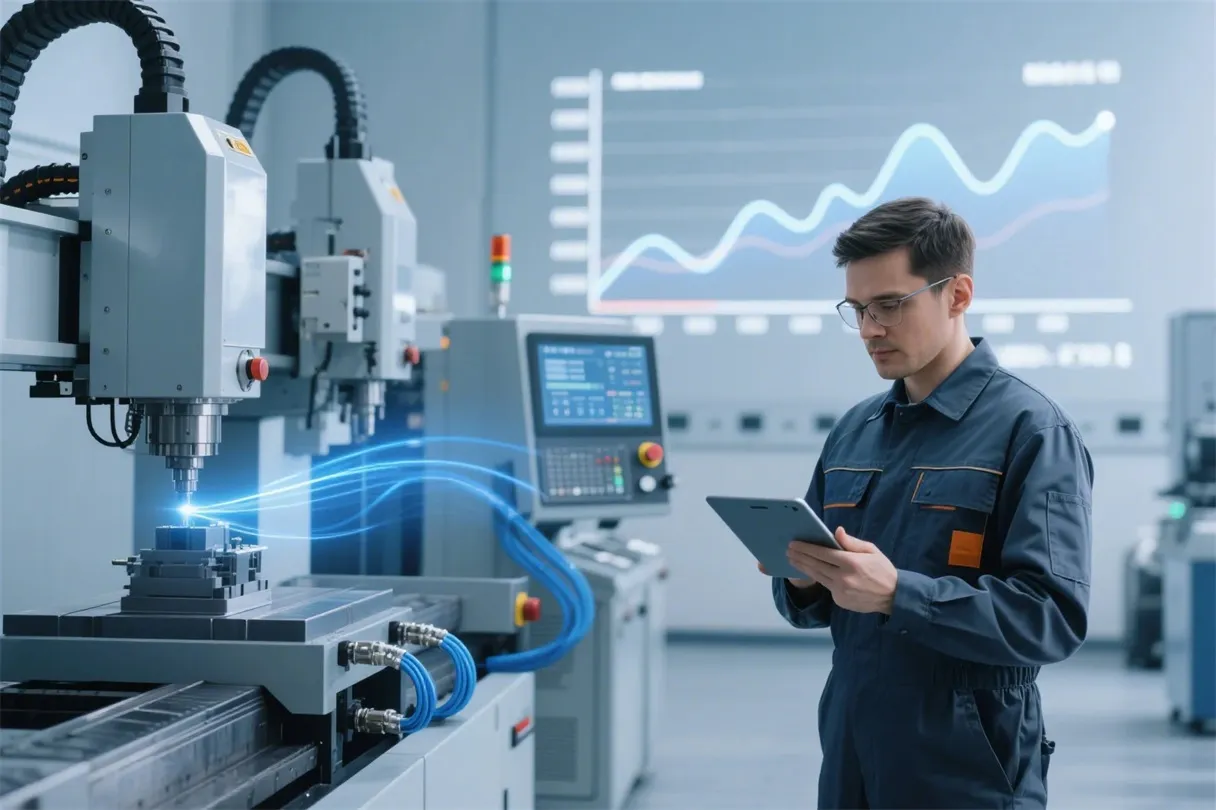
Contact Surface Precision: The tighter the contact with the AI chip, the lower the thermal resistance. CNC machining ensures accuracy.
Active vs Passive Cooling:
Passive heatsinks rely on natural convection, best for lower power modules.
Active heatsinks use fans or liquid cooling channels, ideal for high-performance AI servers.
Comparing Cooling Technologies
As AI workloads expand, manufacturers are exploring innovative cooling strategies:
Traditional Air Cooling: Cost-effective but limited for high-density servers.
Heat Pipes & Vapor Chambers: Transfer heat quickly across surfaces, improving hotspot management.
Liquid Cooling: Increasingly adopted for next-gen AI data centers where air cooling is insufficient.
For most AI servers today, a combination of air cooling with copper baseplates or vapor chambers is the practical balance between performance and cost.
Industry Applications and Case Studies
Data Centers: Massive AI clusters require scalable heatsinks optimized for airflow within server racks.
Edge AI Devices: Compact devices in autonomous cars and IoT rely on lightweight yet efficient heatsinks.
Medical AI Systems: High-performance computing in imaging and diagnostics demands precision-machined heatsinks to guarantee stability.
These examples show that there is no one-size-fits-all solution—customization is the key to optimal performance.
Future Trends in AI Heatsink Development
Integration with AI chips: Future designs will move toward embedded thermal management.
Lightweight composites: Combining graphene and advanced alloys for extreme conductivity.
Smart cooling systems: IoT-enabled heatsinks that adapt cooling in real time.
As AI applications evolve, so too will the demand for custom CNC heatsink solutions.
Conclusion: Why Custom CNC Heatsinks Are the Future
Efficient cooling is the hidden enabler of AI innovation. The right heatsink ensures stability, reduces energy costs, and extends the lifespan of critical AI infrastructure. Choosing between materials, structural designs, and cooling technologies requires careful consideration of application needs.
At, we specialize in custom CNC machining for AI heatsinks. Our team works closely with clients—from reviewing technical drawings to offering cost-effective manufacturing solutions. By combining precision machining with industry expertise, we ensure every heatsink matches exact performance requirements.
If you provide the design drawings, we will deliver the best quotation and tailored service to help you build efficient, reliable, and future-ready AI systems.