CNC Machining

Online CNC Machining Service for Custom Parts

On-demand CNC machining for rapid prototyping and production parts, through a network of specialized, experienced and thoroughly vetted local and global CNC machine shops.

Machined prototypes and production parts in as fast as 1 day. Request an online quote today.

Our CNC Machining Capabilities

On-demand CNC machining for rapid prototyping and production parts, through a network of specialized, experienced and thoroughly vetted local and global CNC machine shops.

Machined prototypes and production parts in as fast as 1 day. Request an online quote today.

What is CNC Machining?

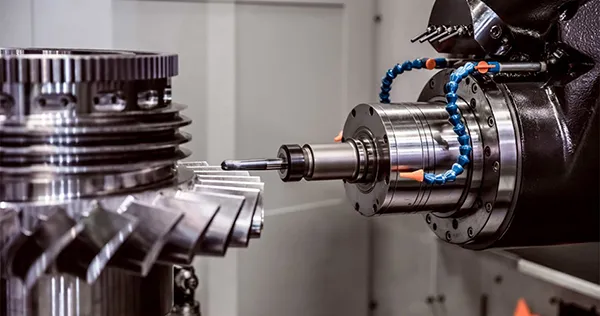
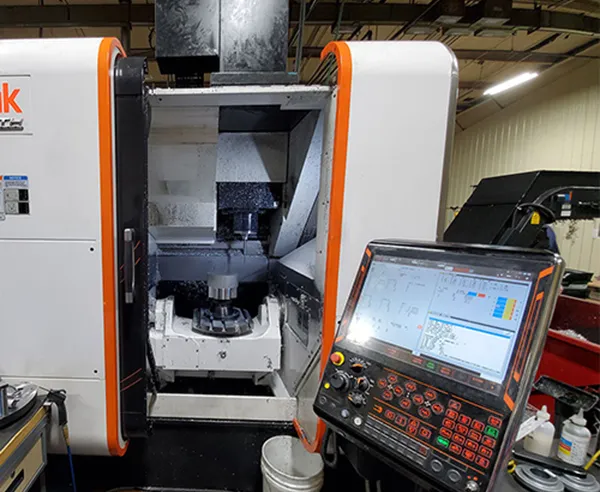
CNC, or computer numerical control machining, is a widely used manufacturing process that uses automated, high-speed cutting tools to form designs from metal or plastic stock. Standard CNC machines include 3-axis, 4-axis, and 5-axis milling machines, lathes, and routers. Machines may vary in how CNC parts are cut—the workpiece may remain in place while the tool moves, the tool may remain in place while the workpiece is rotated and moved, or both the cutting tool and workpiece may move together.

Skilled machinists operate a CNC machine by programming tool paths based on the geometry of the final machined parts. The part geometry information is provided by a CAD (computer-aided design) model. CNC machines can cut almost any metal alloy and rigid plastic with high precision and repeatability, making custom machined parts suitable for nearly every industry, including aerospace, medical, robotics, electronics, and industrial. Xometry provides CNC services and offers custom CNC quotes on over 40 materials ranging from commodity aluminum and acetal to advanced titanium and engineered plastics like PEEK and Teflon.

Our CNC Machining Capabilities

CNC Milling

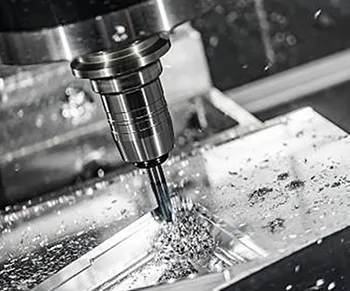
CNC milling is a subtractive manufacturing process that uses 3-axis milling and 5-axis indexed milling processes to cut solid plastic and metal blocks into final parts.

CNC Turning

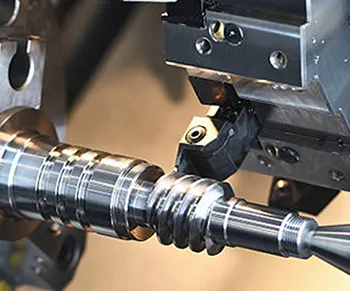
CNC turning with live tooling combines both lathe and mill capabilities to machine parts with cylindrical features from metal rod stock.

Gallery Of CNC Machined Parts

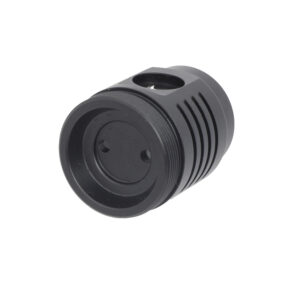
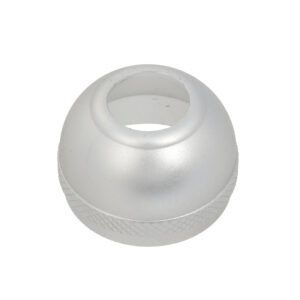
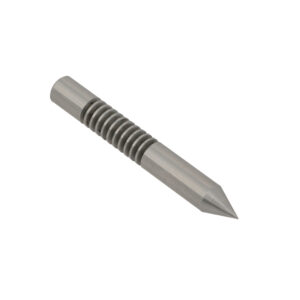
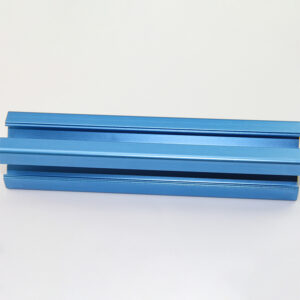
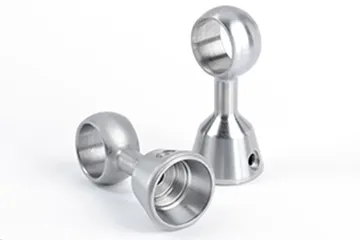
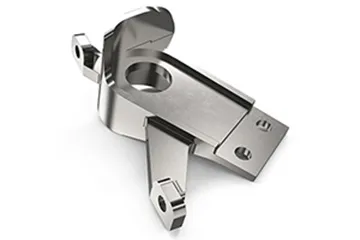
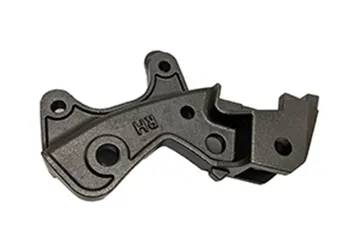
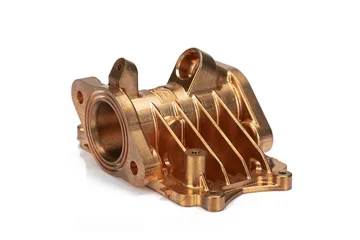
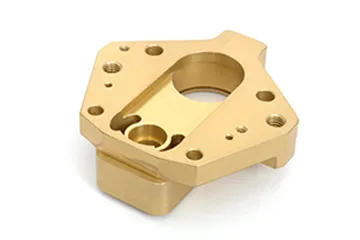
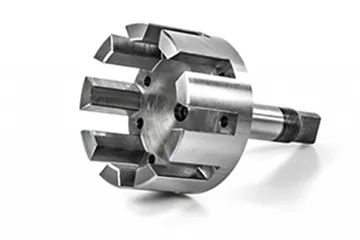
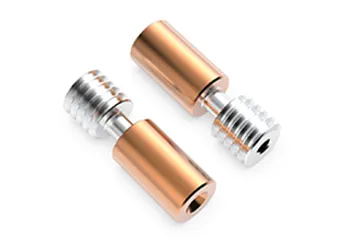
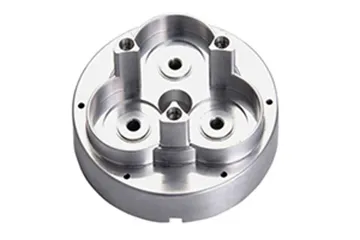
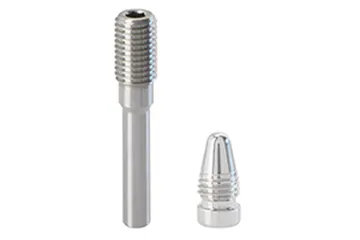
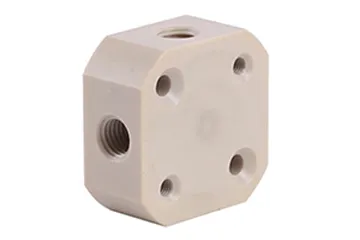
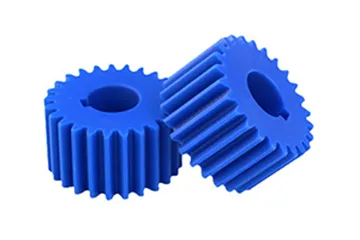
Here’s a small selection of the CNC machined prototypes and end-use parts we’ve produced for our customers.

CNC Machining Materials

We can generate instant machining quotes for 50+ metals and plastics.

Metals

Aluminum

Aluminum alloys have good strength-to-weight ratio, high thermal and electrical conductivity, low density and natural corrosion resistance. Can be anodized.

Stainless steel

Stainless steel alloys have high strength, ductility, wear and corrosion resistance. They can be easily welded, machined and polished.


Mild steel

Mild steels are low-carbon metal alloys offering good mechanical properties, machinability and weldability at low cost. Can be carburized to increased hardness.


Brass

Brass is a metal alloy with good machinability and excellent electrical conductivity. Ideal for applications that require low friction.


Copper

Copper offers excellent thermal and electrical conductivity, it’s often used for busbars, wire connectors, and other electrical applications. Copper has a glossy reddish-orange appearance.


Alloys

PTFE (Teflon)

Alloy steels contain other alloying elements in addition to carbon, resulting in improved hardness, toughness, fatigue and wear resistance.

Alloys

Tool steel

Tool steels are metal alloys with exceptionally high hardness, stiffness and abrasion resistance. Suitable for manufacturing industrial tools.

Alloys

Titanium

Titanium is a metal with excellent strength-to-weight ratio, low thermal expansion and high corrosion resistance that is sterilizable and biocompatible.


Alloys

Inconel

Inconel is a high-strength, corrosion-resistant nickel alloy. Ideal for aerospace applications.


Alloys

Invar

Invar is a nickel alloy with a very low coefficient of thermal expansion. Ideal for applications where high dimensional stability is required, such as precision instruments, engines valves and large aerostructure molds.

Alloys

Plastics

POM (Delrin/Acetal)

 POM is an engineering thermoplastic used in precision parts requiring high stiffness, low friction, and excellent dimensional stability.

Nylon

Nylon Nylon – polyamide (PA) – is an engineering thermoplastic with excellent mechanical properties and high chemical and abrasion resistance.

PPSU

PPSU offers exceptional hydrolytic stability, and toughness superior to other commercially-available, high-temperature engineering resins. They offer high deflection temperatures and outstanding resistance to environmental stress cracking. This polymer is inherently flame retardant, and also has excellent thermal stability and good electrical properties.

ABS

ABS is a common thermoplastic with all-around good mechanical properties, excellent impact strength, good heat resistance and good machinability.


PEEK

PEEK is a high-performance engineering thermoplastic with excellent mechanical properties and chemical over a very wide temperature range.


Alloys

PTFE (Teflon)

PTFE is an engineering thermoplastic with excellent chemical and thermal resistance and the lowest coefficient of friction of any know solid.


PTFE (Teflon)

Polycarbonate (PC) is a thermoplastic with high toughness, excellent impact strength and good machinability. Can be optically transparent.


Polyethylene

Polyethylene (PE) is a thermoplastic with high strength-to-weight ratio, good impact strength and excellent weather resistance.


Alloys

PVC

PVC is the third most used plastic with all-around good mechanical properties, excellent chemical and weather resistance and good toughness.


Alloys

PMMA (Acrylic)

PMMA is a transparent rigid plastic often used as a substitute for glass.


Alloys

CNC Machining Tolerances

FeatureDescription
Maximum Part SizeMilled parts up to 80” x 48” x 24” (2,032 x 1,219 x 610 mm). Lathe parts up to 62” (1,575 mm) length and 32” (813 mm) diameter.
Standard Lead Time3 business days
General TolerancesTolerances on metals will be held to +/- 0.005″ (+/- 0.127 mm) in accordance with ISO 2768 unless otherwise specified. Plastics and composites will be +/- 0.010”.
Precision TolerancesEversolid can manufacture and inspect to tight tolerances per your drawing specifications including GD&T callouts.
Minimum Feature Size0.020” (0.50 mm). This may vary depending on part geometry and chosen material.
Threads and Tapped HolesEversolid can accommodate any standard thread size. We can also machine custom threads; these will require a manual quote review.
Edge ConditionSharp edges are broken and deburred by default
Surface FinishThe standard finish is as-machined: 125 Ra or better. Additional finishing options can be specified when getting a quote.

Why Choose Us for Custom CNC Machining?

Fast and Reliably Delivery

Iterate part designs quickly and accelerate product development with quick-turn parts. Our automated design analysis will help spot any difficult to machine features before your design is sent to the manufacturing floor and save you from costly reworks further down the product development cycle.

Infinite Capacity

Eliminate downtime spent waiting for parts and safeguard in-house machining with on-demand relief and infinite manufacturing capacity.

Material Selection

We stock more than 30 engineering-grade plastic and metal materials that are suitable for various part applications and industries. Materials range from plastics like ABS, polycarbonate, nylon, and PEEK to aluminum, stainless steel, platinum, and copper.

Manufacturing Analysis and Online Quotes

When you upload your 3D CAD file to request a quote, we’ll analyze your part geometry to identify any features that may be difficult to machine such as tall, thin walls or holes that cannot be threaded.

Advanced Capabilities

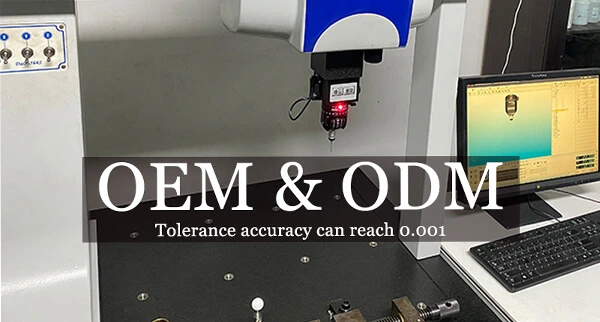
Get anodizing, tighter tolerances, and volume pricing options through our network of manufacturers at Hubs. You’ll find plating (black oxide, nickel), anodizing (Type II, Type III), and chromate coating in larger part quantities; tolerances down to ±0.001 in. (0.020mm); and cost-efficient machined parts at higher volumes to lower piece-part price.

CNC Machining FAQ

What industries use CNC machining?

CNC machining is widely used across industries. It is common in aerospace, automotive, consumer electronics, robotics, agriculture, and other fields that frequently use metal parts. It is also widely used in medical devices, household goods, energy, oil and gas, and other consumer applications. It is one of the most common manufacturing processes in the world.

CNC machining uses subtractive processes, which means feedstock is machined to its final form by subtracting and removing material. Holes are drilled, lots and pathways are bored, and metal stock is shaped into new material with varying tapers, diameters, and shapes.

For subtractive manufacturing, shapes are achieved by the subtraction of material. This contrasts with other types such as additive manufacturing — where materials are added, layered, and deformed to a specified shape. It also contrasts with injection molding where the material is injected in a different state of matter, using a mold, and formed to a specified shape.

CNC machining is versatile — and can be used with various materials, including metals, plastics, wood, glass, foam, and other composite materials. This versatility has helped make CNC machining a popular choice across industries, enabling designers and engineers to fabricate products efficiently and precisely.

In traditional machining, a skilled machinist operates a machine, removing or forming metal. This is done according to specifications provided by designers and engineers, usually through an engineering drawing or blueprint. They use turn wheels, dials, switches, chucks, vices, and a variety of cutting tools made of hardened steel, carbide, and industrial diamond, then use measurement instruments to ensure all of the dimensions are correct.

CNC machining performs the same function as traditional machining — metal cutting, drilling, milling, boring, grinding, and other metal forming and removal functions — but CNC machines use computer numerical control rather than manual control by a machinist. It is automated, driven by code, and developed by programmers. It is about as precise the first time of cutting as the 500th. Widely used in digital manufacturing (and sometimes in low-volume production runs), it can be revised and altered for modifications and different materials.

This type of machining is much more precise and has superseded traditional machining (though not entirely) in manufacturing, fabrication, and industrial production. It uses mathematical coordinates and computing power to achieve the same end with the greatest accuracy. Specifically, computer numerical control uses Cartesian coordinates. These are spatial coordinates — in several dimensions — using coordinates and axes. The automation of cutting tool machines controls its cutting, boring, drilling, or other operation using the numerical control of a computer that reads the coordinates. These coordinates were designated by engineers in the product’s digital drawing and design.


Prices vary based on complexity, quantity and workmanship. The best way is to submit a 3D CAD model and get an interactive quote with Design for Manufacturability (DFM) feedback. Of course, if you don’t have a CAD model, you can provide your ideas and our engineers will create a professional and reliable design for you. picture.


We offer UNF, UNC and metric threads as well as coil and key inserts for machining, and customization is also available.


Prices vary based on complexity, quantity and workmanship. The best way is to submit a 3D CAD model and get an interactive quote with Design for Manufacturability (DFM) feedback. Of course, if you don’t have a CAD model, you can provide your ideas and our engineers will create a professional and reliable design for you. picture.


Leave Yoyr Message

AI Help